🔷 THE SCIENCE OF MICROBIOLOGY
🔶 INTRODUCTION
🔹 Subcontents
🔸 Definition of Microbiology
-
Study of microorganisms (not visible to naked eye)
-
Includes bacteria, viruses, fungi, parasites, prions
-
Focus: structure, function, genetics, pathogenicity
🔸 Scope of Microbiology
-
Medical microbiology → disease causation, diagnosis
-
Industrial microbiology → antibiotics, vaccines
-
Environmental microbiology → nutrient cycles
-
Food microbiology → fermentation, spoilage
-
Molecular microbiology → genetic engineering
🔸 Branches of Microbiology
🔸 Historical Milestones
-
Antonie van Leeuwenhoek
-
Louis Pasteur
-
Robert Koch
🧠 Koch’s Postulates (Flowchart)
Organism present in diseased host
↓
Isolate and grow in pure culture
↓
Inoculate into healthy host → disease reproduced
↓
Re-isolate same organism
🔸 Importance in Medicine
-
Identification of pathogens
-
Basis of diagnosis, treatment, prevention
-
Development of vaccines, antibiotics
-
Understanding epidemiology
🔸 Normal Flora vs Pathogens
🔸 Infection vs Disease
🔸 Types of Infections
-
Primary infection → initial infection
-
Secondary infection → follows primary infection
-
Opportunistic infection → occurs in immunocompromised host
-
Subclinical infection → no symptoms
🔸 Reservoir of Infection
Types:
🔸 Modes of Transmission
-
Direct
-
Person-to-person contact
-
Droplet spread
-
Indirect
-
Vector-borne
🔸 Basic Terminologies
-
Sterilization
-
Disinfection
-
Culture
-
Media
-
Pathogen
-
Opportunist
📊 TABLES (VERY HIGH-YIELD)
🔸 Branches of Microbiology
| Branch |
Organism Studied |
| Bacteriology |
Bacteria |
| Virology |
Viruses |
| Mycology |
Fungi |
| Parasitology |
Protozoa, helminths |
| Immunology |
Immune system |
🔸 Key Contributors
| Scientist |
Contribution |
| Leeuwenhoek |
First microscope observations |
| Pasteur |
Germ theory, vaccines |
| Koch |
Koch’s postulates |
🔸 Types of Infections
| Type |
Description |
| Primary |
Initial infection |
| Secondary |
Follows primary |
| Opportunistic |
In immunocompromised |
| Subclinical |
No symptoms |
🔸 Modes of Transmission
| Mode |
Examples |
| Direct |
Contact, droplets |
| Indirect |
Fomites, airborne |
| Vector-borne |
Mosquito, ticks |
🔬 SLIDES (EXAM FAVORITE)
🔸 Bacterial Colony on Culture Media

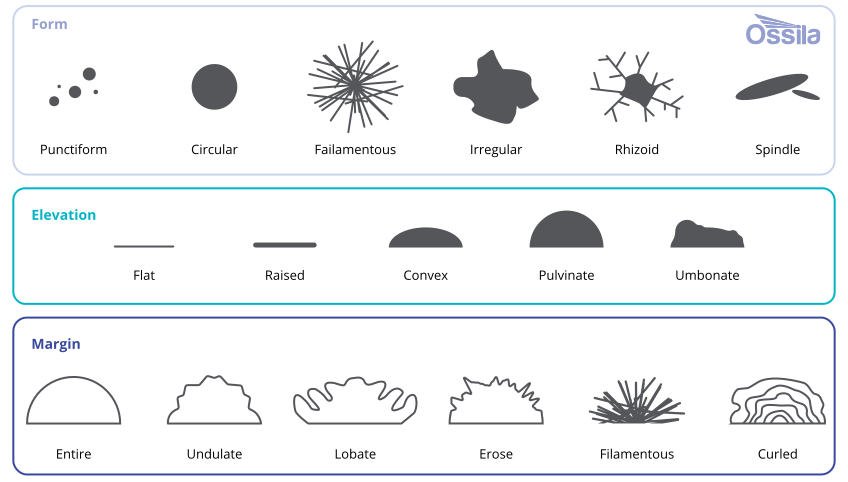

Description (Exam points):
🧠 FIGURES / DIAGRAMS
🔸 Host–Microbe Interaction Spectrum
Commensalism → Mutualism → Parasitism
             ↓
        Disease (pathogenicity)
🔸 Chain of Infection (VERY HIGH-YIELD)
Infectious agent
↓
Reservoir
↓
Portal of exit
↓
Mode of transmission
↓
Portal of entry
↓
Susceptible host
🔷 BIOLOGIC PRINCIPLES ILLUSTRATED BY MICROBIOLOGY
🔹 Subcontents
🔸 Cell Theory
-
All living organisms are composed of cells
-
Cell is the basic structural and functional unit
-
Cells arise from pre-existing cells
-
Microorganisms follow same fundamental cellular principles
🔸 Prokaryote vs Eukaryote Concept
🔸 Levels of Biological Organization
-
Molecular → DNA, RNA, proteins
-
Cellular → individual cells
-
Tissue → group of cells
-
Organ → functional unit
-
Organism → complete living entity
🔸 Central Dogma (DNA → RNA → Protein)
🧠 Central Dogma Diagram
DNA
↓ (Transcription)
RNA
↓ (Translation)
Protein
🔸 Genotype vs Phenotype
🔸 Mutation and Variation
Types:
-
Point mutation
-
Frameshift mutation
-
Leads to:
-
Variation
-
Drug resistance
-
Virulence changes
🔸 Evolution and Natural Selection
-
Microbes evolve through:
-
Mutation
-
Genetic recombination
-
Natural selection
🔸 Horizontal Gene Transfer
Types:
-
Transformation
-
Transduction
-
Conjugation
🔸 Adaptation Mechanisms of Microbes
-
Genetic mutation
-
Gene transfer
-
Enzyme production
-
Biofilm formation
-
Antimicrobial resistance
🔸 Host–Parasite Relationship
-
Commensalism
-
Mutualism
-
Parasitism
🔸 Pathogenicity vs Virulence
🔸 Basics of Immune Response
-
Innate immunity
-
First line defense
-
Non-specific
-
Adaptive immunity
-
Specific response
-
Memory present
📊 TABLES
🔸 Prokaryotic vs Eukaryotic Cells
| Feature |
Prokaryotes |
Eukaryotes |
| Nucleus |
Absent |
Present |
| Organelles |
Absent |
Present |
| DNA |
Circular |
Linear |
| Size |
Small |
Large |
| Ribosomes |
70S |
80S |
🔸 Types of Host–Microbe Relationships
| Type |
Description |
| Commensalism |
One benefits, other unaffected |
| Mutualism |
Both benefit |
| Parasitism |
Host harmed |
🔸 Pathogenicity vs Virulence
| Feature |
Pathogenicity |
Virulence |
| Definition |
Ability to cause disease |
Severity of disease |
| Nature |
Qualitative |
Quantitative |
🔸 Types of Genetic Transfer
| Type |
Mechanism |
| Transformation |
Naked DNA uptake |
| Transduction |
Phage-mediated |
| Conjugation |
Sex pili transfer |
🔬 SLIDES
🔸 Bacterial Conjugation (Electron Microscopy Image)

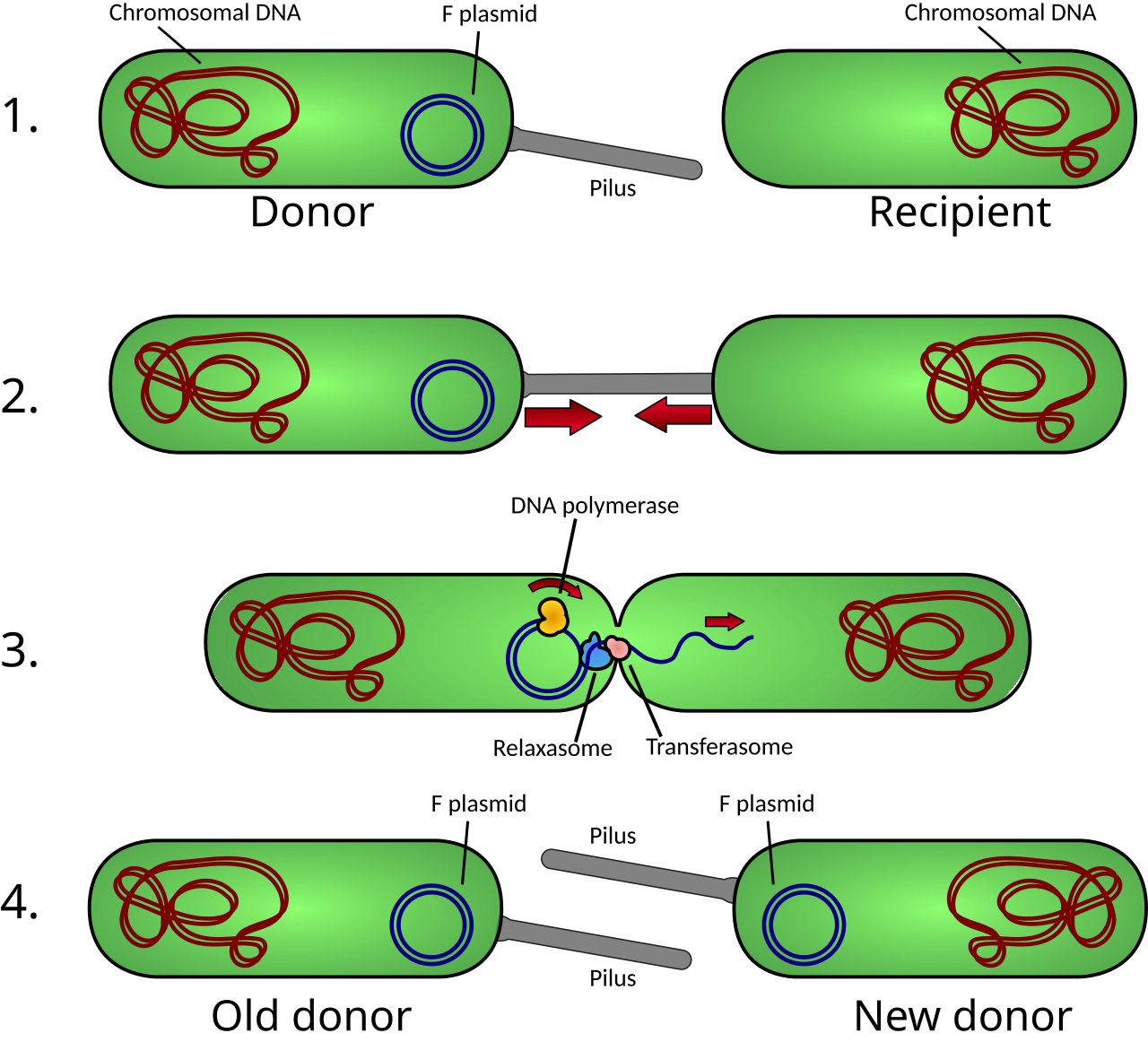

Description (Exam points):
-
Two bacteria connected by sex pilus
-
DNA transfer from donor (F+) to recipient (F−)
-
Important mechanism of antibiotic resistance spread
🧠 FIGURES / DIAGRAMS
🔸 Host–Parasite Interaction Spectrum
Mutualism → Commensalism → Parasitism
                        ↓
                   Disease
🔸 Horizontal Gene Transfer Diagram
Transformation → Naked DNA uptake
Transduction → Phage-mediated transfer
Conjugation → Sex pilus DNA transfer
🔸 Evolution of Microbes
Mutation
↓
Genetic variation
↓
Natural selection
↓
Adaptation
↓
Evolution
🔷 VIRUSES
🔹 Subcontents
🔸 Definition and General Properties
-
Viruses are obligate intracellular parasites
-
Contain single type of nucleic acid (DNA or RNA)
-
Lack cellular organelles
-
Cannot grow on artificial media
-
Replicate only inside living cells
🔸 Structure of Viruses
-
Capsid
-
Protein coat
-
Made of capsomeres
-
Envelope
-
Nucleic Acid
🔸 Symmetry Types
-
Icosahedral
-
Spherical appearance
-
Example: Adenovirus
-
Helical
-
Rod-shaped
-
Example: Rabies virus
-
Complex
-
Combination structure
-
Example: Bacteriophage
🔸 Classification of Viruses
-
Based on:
-
Nucleic acid type
-
Presence of envelope
-
Symmetry
-
Replication strategy
🔸 Baltimore Classification (Intro)
| Group |
Genome Type |
| I |
dsDNA |
| II |
ssDNA |
| III |
dsRNA |
| IV |
ssRNA (+) |
| V |
ssRNA (−) |
| VI |
RNA with reverse transcriptase |
| VII |
DNA with reverse transcriptase |
🔸 Viral Replication Cycle
Steps:
-
Attachment
-
Penetration
-
Uncoating
-
Replication
-
Assembly
-
Release
🧠 Viral Replication Flowchart
Attachment
↓
Penetration
↓
Uncoating
↓
Replication
↓
Assembly
↓
Release
🔸 Lytic vs Lysogenic Cycle
-
Lytic cycle
-
Lysogenic cycle
🔸 One-Step Growth Curve
Phases:
-
Latent phase
-
Eclipse phase
-
Burst phase
🔸 Cytopathic Effects
🔸 Inclusion Bodies
Examples:
🔸 Bacteriophages
-
Viruses infecting bacteria
-
Have head, tail, tail fibers
-
Can undergo lytic or lysogenic cycle
🔸 Differences: DNA vs RNA Viruses
-
DNA viruses → replicate in nucleus
-
RNA viruses → replicate in cytoplasm
-
RNA viruses mutate rapidly
🔸 Oncogenic Viruses (Intro)
Examples:
📊 TABLES
🔸 DNA vs RNA Viruses
| Feature |
DNA Viruses |
RNA Viruses |
| Genome |
DNA |
RNA |
| Replication site |
Nucleus |
Cytoplasm |
| Mutation rate |
Low |
High |
🔸 Enveloped vs Non-Enveloped Viruses
| Feature |
Enveloped |
Non-Enveloped |
| Outer layer |
Lipid envelope |
Absent |
| Stability |
Fragile |
Resistant |
| Transmission |
Direct contact |
Fomites |
🔸 Stages of Viral Replication
| Stage |
Description |
| Attachment |
Virus binds to host |
| Penetration |
Entry into cell |
| Uncoating |
Release of genome |
| Replication |
Genome synthesis |
| Assembly |
Formation of virions |
| Release |
Exit from cell |
🔸 Virus Symmetry Types
| Type |
Shape |
Example |
| Icosahedral |
Spherical |
Adenovirus |
| Helical |
Rod-shaped |
Rabies |
| Complex |
Irregular |
Bacteriophage |
🔸 Lytic vs Lysogenic Cycle
| Feature |
Lytic |
Lysogenic |
| Host cell |
Destroyed |
Survives |
| Viral DNA |
Independent |
Integrated |
| Outcome |
Rapid replication |
Latency |
🔬 SLIDES
🔸 Inclusion Bodies (Negri Bodies – Rabies)


Description (Exam points):
🔸 Cytopathic Effects in Cell Culture


Description (Exam points):
🔸 Viral Plaques

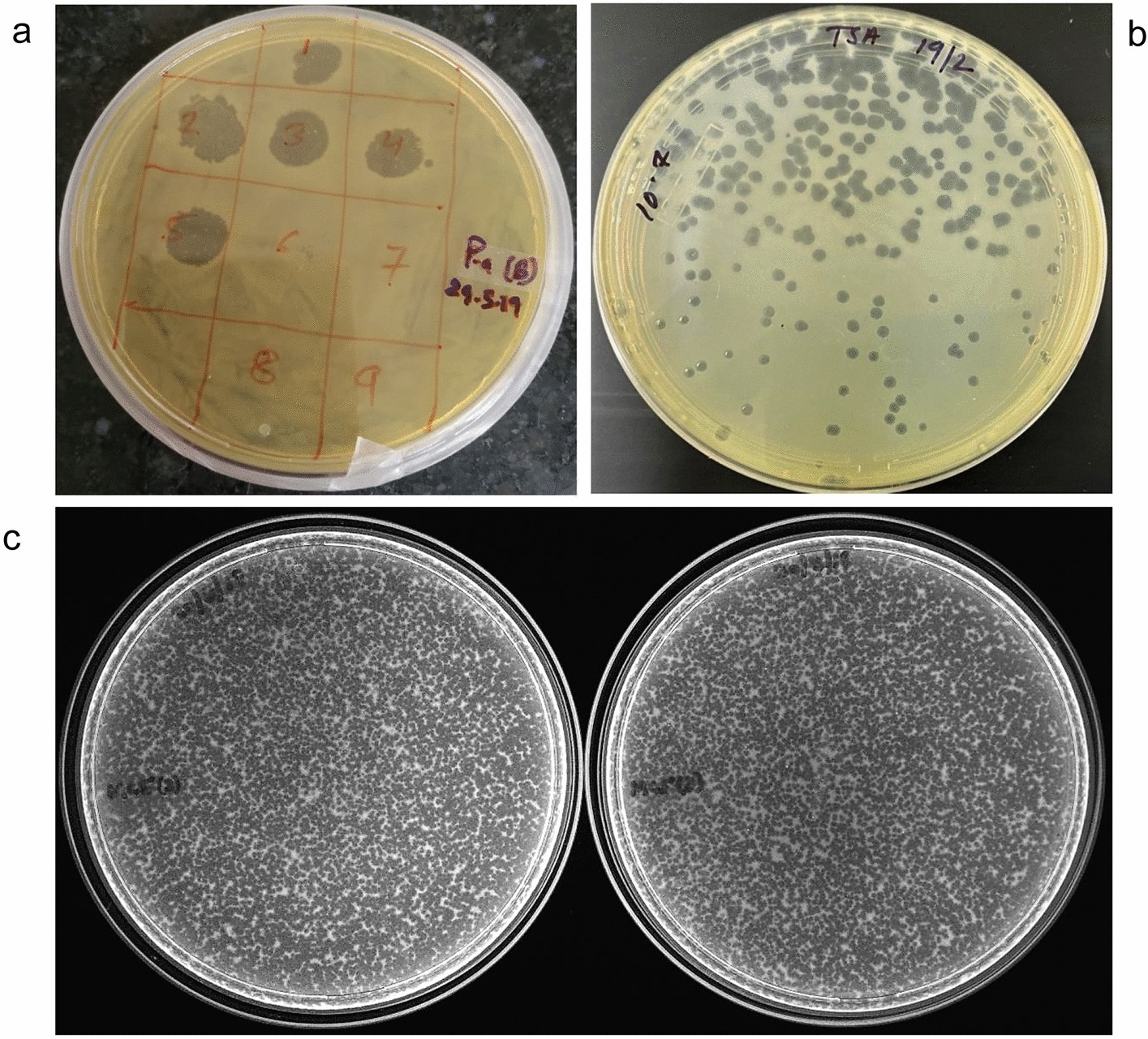

Description (Exam points):
-
Clear zones in bacterial lawn
-
Each plaque = infection by single virus
-
Used for viral quantification
🧠 FIGURES / DIAGRAMS
🔸 Virus Structure
Capsid
↓
Nucleic acid
↓
Envelope (optional with spikes)
🔸 Lytic vs Lysogenic Cycle
Lytic: Entry → Replication → Cell lysis

Lysogenic: Entry → Integration → Latency → Activation → Lysis
🔸 One-Step Growth Curve
Latent phase → Eclipse phase → Burst phase
🔸 Bacteriophage Structure
Head (DNA)
↓
Neck
↓
Tail
↓
Tail fibers
🔷 PRIONS
🔹 Subcontents
🔸 Definition
-
Prions are proteinaceous infectious particles
-
Lack nucleic acid (no DNA or RNA)
-
Cause neurodegenerative diseases
🔸 Structure (Protein Only)
🔸 Mechanism of Disease
🧠 Prion Conversion Mechanism
Normal PrPc
↓
Interaction with PrPsc
↓
Misfolding
↓
Accumulation of PrPsc
↓
Neuronal damage
🔸 Diseases Caused
🔸 Species Barrier
-
Transmission between species is limited
-
Due to differences in PrP structure
-
Barrier can be crossed (e.g., BSE → humans)
🔸 Pathological Changes
-
Spongiform degeneration
-
Neuronal loss
-
Gliosis
-
No inflammatory response
🔸 Unique Properties
📊 TABLES
🔸 Prions vs Viruses
| Feature |
Prions |
Viruses |
| Genetic material |
Absent |
DNA/RNA present |
| Structure |
Protein only |
Nucleic acid + protein |
| Replication |
Protein misfolding |
Host cell machinery |
| Resistance |
Highly resistant |
Less resistant |
🔸 Prion Diseases Classification
| Type |
Example |
| Sporadic |
CJD |
| Familial |
Genetic CJD |
| Acquired |
Kuru, BSE |
🔬 SLIDES
🔸 Spongiform Encephalopathy (Brain Section)

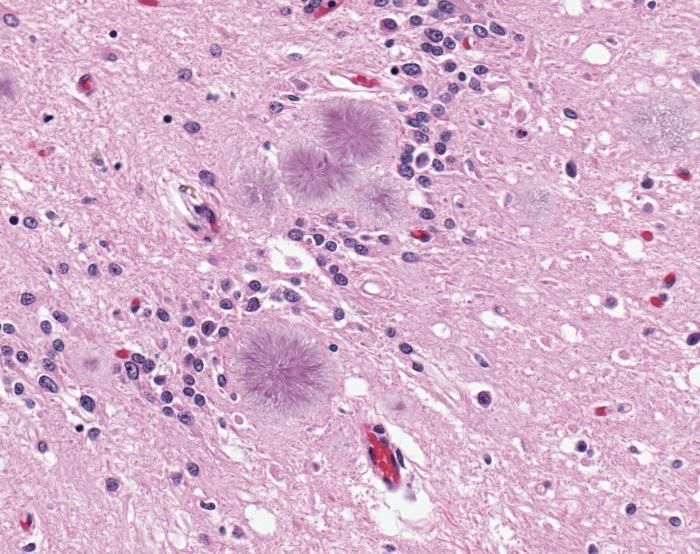
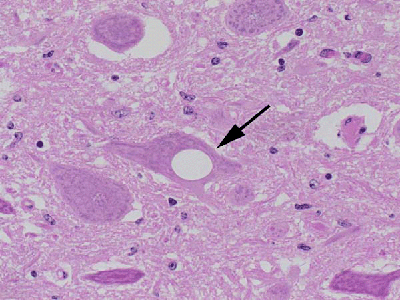
Description (Exam points):
🧠 FIGURES / DIAGRAMS
🔸 Pathogenesis Flowchart
Prion entry
↓
Conversion of PrPc → PrPsc
↓
Accumulation in brain
↓
Neuronal damage
↓
Spongiform degeneration
🔷 PROKARYOTES (VERY HIGH-YIELD)
🔹 Subcontents
🔸 Definition and General Characteristics
-
Unicellular organisms without true nucleus
-
DNA present as nucleoid (circular DNA)
-
Lack membrane-bound organelles
-
Size: 1–5 µm
-
Multiply by binary fission
-
Cell wall usually present
🔸 Structure of Bacterial Cell
🔹 Cell Wall
▪ Peptidoglycan
▪ Teichoic Acid
▪ Lipopolysaccharide (LPS)
🔹 Cell Membrane
-
Phospholipid bilayer
-
Site of:
-
Respiration
-
Enzyme activity
-
Transport
🔹 Cytoplasm
🔹 Nucleoid
🔹 Ribosomes
🔹 Capsule
-
Polysaccharide layer
-
Functions:
-
Antiphagocytic
-
Virulence factor
🔹 Flagella
-
Motility structures
-
Composed of flagellin
Types:
-
Monotrichous
-
Lophotrichous
-
Amphitrichous
-
Peritrichous
🔹 Pili / Fimbriae
-
Hair-like structures
-
Functions:
-
Adhesion
-
Conjugation (sex pili)
🔸 Gram Staining Principle (Stepwise)
Steps:
-
Crystal violet (primary stain)
-
Iodine (mordant)
-
Alcohol (decolorizer)
-
Safranin (counterstain)
Result:
-
Gram-positive → purple
-
Gram-negative → pink
🔸 Bacterial Morphology
Arrangements:
-
Chains (strepto-)
-
Clusters (staphylo-)
-
Pairs (diplo-)
🔸 Bacterial Motility Types
-
Flagellar motility
-
Gliding motility
-
Twitching motility
🔸 Growth and Reproduction
-
Binary fission
-
Rapid multiplication
-
Generation time varies
🔸 Bacterial Growth Curve
Phases:
-
Lag phase
-
Log phase
-
Stationary phase
-
Nutrient depletion
-
Growth = death
-
Decline phase
🔸 Bacterial Metabolism
-
Energy production via:
-
Aerobic respiration
-
Anaerobic respiration
-
Fermentation
🔸 Nutritional Types
Subtypes:
🔸 Oxygen Requirements
-
Obligate aerobes
-
Obligate anaerobes
-
Facultative anaerobes
-
Microaerophilic
🔸 Sporulation
🔸 Plasmids and Episomes
-
Plasmids
-
Extrachromosomal DNA
-
Carry resistance genes
-
Episomes
📊 TABLES (VERY HIGH-YIELD)
🔸 Gram-Positive vs Gram-Negative
| Feature |
Gram-Positive |
Gram-Negative |
| Cell wall |
Thick peptidoglycan |
Thin peptidoglycan |
| Teichoic acid |
Present |
Absent |
| LPS |
Absent |
Present |
| Staining |
Purple |
Pink |
🔸 Bacterial Structures and Functions
| Structure |
Function |
| Cell wall |
Shape, protection |
| Capsule |
Virulence, protection |
| Flagella |
Motility |
| Pili |
Adhesion, conjugation |
| Ribosomes |
Protein synthesis |
🔸 Shape-Based Classification
| Shape |
Example |
| Cocci |
Staphylococcus |
| Bacilli |
E. coli |
| Spiral |
Treponema |
🔸 Oxygen Requirement Classification
| Type |
Example |
| Obligate aerobe |
Mycobacterium |
| Obligate anaerobe |
Clostridium |
| Facultative anaerobe |
E. coli |
| Microaerophilic |
Helicobacter |
🔸 Nutritional Types
| Type |
Description |
| Autotroph |
Uses CO₂ |
| Heterotroph |
Uses organic nutrients |
| Saprophyte |
Dead matter |
| Parasite |
Living host |
🔸 Growth Phases vs Features
| Phase |
Feature |
| Lag |
Adaptation |
| Log |
Rapid growth |
| Stationary |
No net growth |
| Decline |
Death phase |
🔸 Cell Wall Components
| Component |
Function |
| Peptidoglycan |
Strength |
| Teichoic acid |
Stability |
| LPS |
Endotoxin |
🔬 SLIDES (EXAM FAVORITE)
🔸 Gram Staining (Gram-positive vs Gram-negative)
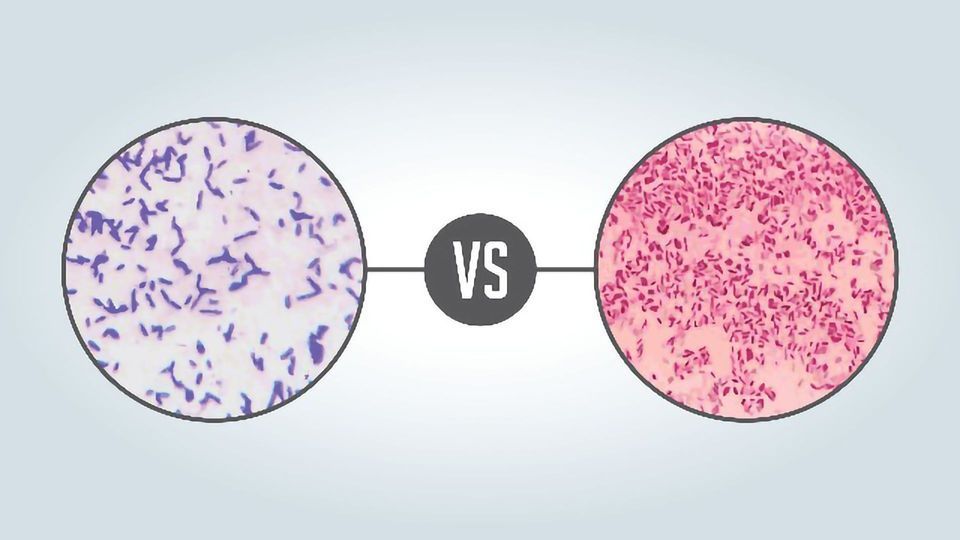


Description (Exam points):
🔸 Spore Staining (Endospores)
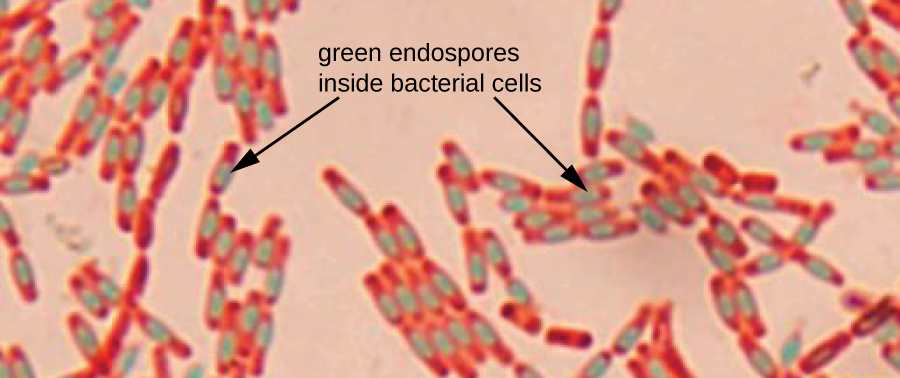

Description (Exam points):
🧠 FIGURES / DIAGRAMS
🔸 Bacterial Cell Structure
Capsule
↓
Cell wall
↓
Cell membrane
↓
Cytoplasm
↓
Nucleoid
↓
Ribosomes
🔸 Gram Staining Mechanism
Crystal violet → Iodine complex
↓
Alcohol wash
↓
Gram (+): retains color
Gram (−): loses color
↓
Safranin counterstain
🔸 Growth Curve
Lag → Log → Stationary → Decline
🔸 Sporulation
Vegetative cell
↓
Spore formation
↓
Dormant spore
↓
Germination → active cell
🔬 SLIDES (EXAM FAVORITE)
🔸 Gram-Positive Cocci


Description (Exam points):
🔸 Gram-Negative Bacilli


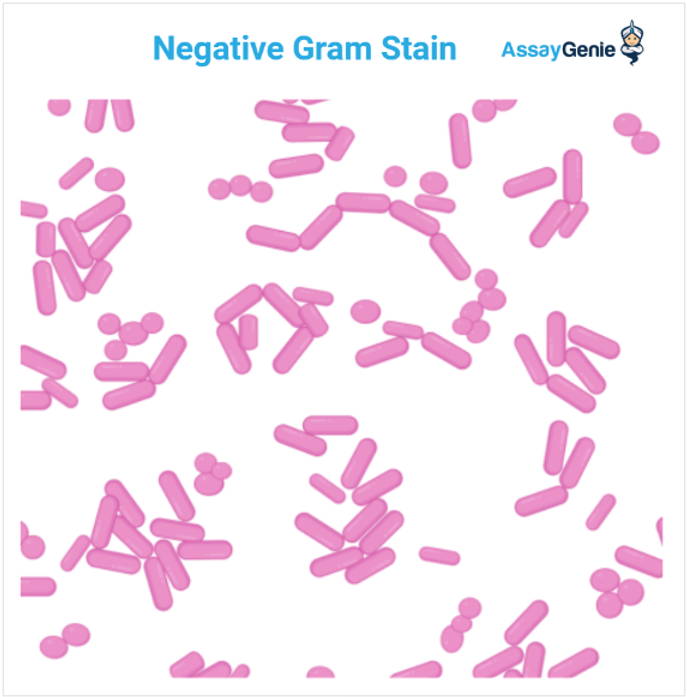
Description (Exam points):
🔸 Capsule Staining
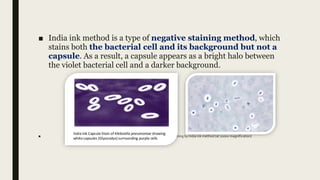


Description (Exam points):
🔸 Spore Staining
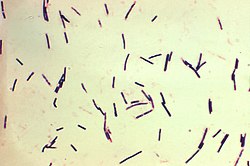
Description (Exam points):
-
Green spores within red cells
-
Highly resistant structures
-
Seen in Bacillus, Clostridium
🔸 Flagella Staining
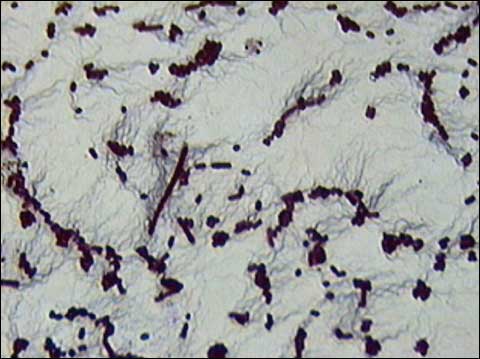
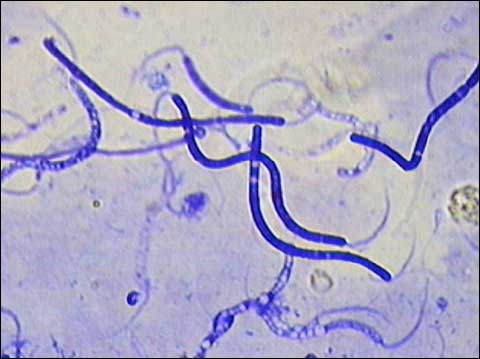
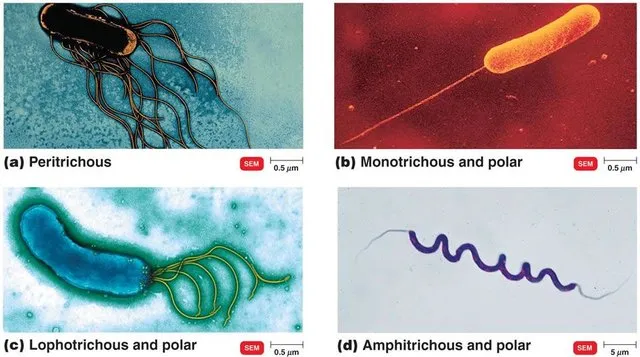
Description (Exam points):
-
Thin filamentous structures
-
Helps identify motility pattern
-
Special staining required
🔸 Gram Staining Steps

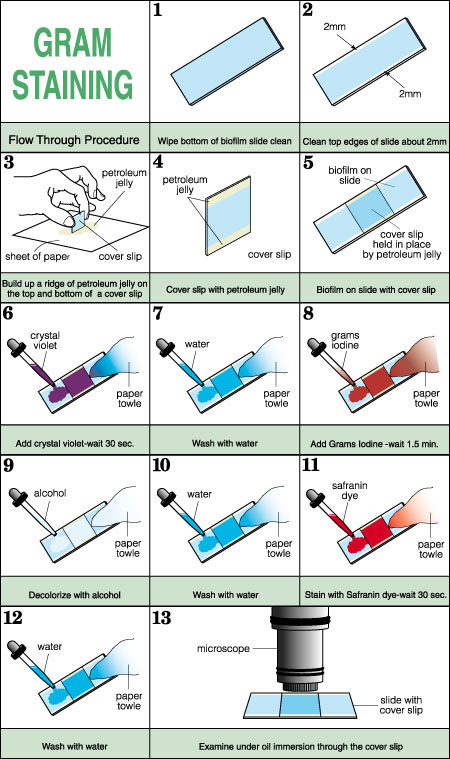
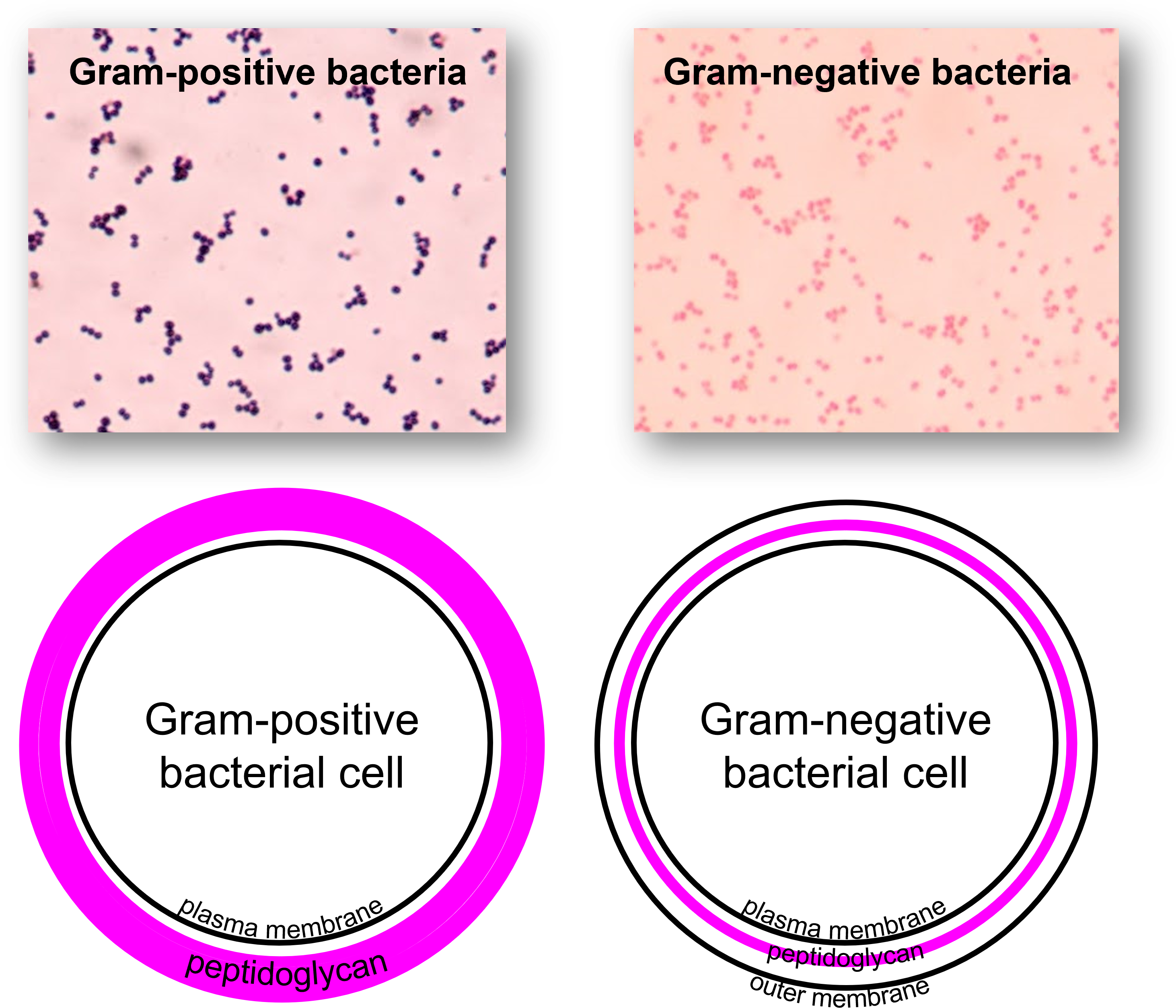
Description (Exam points):
🔸 Acid-Fast Staining (Intro)


Description (Exam points):
-
Red bacilli on blue background
-
Mycolic acid in cell wall
-
Example: Mycobacterium tuberculosis
🧠 FIGURES / DIAGRAMS
🔸 Bacterial Cell Structure
Capsule
↓
Cell wall
↓
Cell membrane
↓
Cytoplasm
↓
Nucleoid
↓
Ribosomes
🔸 Gram Staining Mechanism
Crystal violet → Iodine complex
↓
Alcohol wash
↓
Gram (+): retains color
Gram (−): decolorized
↓
Safranin counterstain
🔷 PROTISTS
🔹 Subcontents
🔸 Definition
-
Protists are unicellular eukaryotic organisms
-
Include protozoa, algae, slime molds
-
Possess true nucleus and organelles
🔸 Types
🔸 General Characteristics
🔸 Classification of Protozoa
-
Amoebae → pseudopodia (e.g., Entamoeba)
-
Flagellates → flagella (e.g., Giardia)
-
Ciliates → cilia (e.g., Balantidium)
-
Sporozoa → non-motile (e.g., Plasmodium)
🔸 Trophozoite vs Cyst (VERY IMPORTANT)
-
Trophozoite
-
Active, feeding stage
-
Motile
-
Sensitive to environment
-
Cyst
🔸 Life Cycles
-
Involve:
-
Trophozoite stage
-
Cyst stage
-
May require:
🔸 Modes of Transmission
🔸 Pathogenic vs Non-Pathogenic Protozoa
-
Pathogenic
-
Non-pathogenic
-
Harmless commensals
-
Example: Entamoeba coli
🔸 Medical Importance
📊 TABLES
🔸 Classification of Protozoa
| Group |
Mode of Movement |
Example |
| Amoebae |
Pseudopodia |
Entamoeba |
| Flagellates |
Flagella |
Giardia |
| Ciliates |
Cilia |
Balantidium |
| Sporozoa |
Non-motile |
Plasmodium |
🔸 Protozoa and Diseases
| Organism |
Disease |
| Entamoeba histolytica |
Amoebiasis |
| Giardia lamblia |
Giardiasis |
| Plasmodium |
Malaria |
🔸 Trophozoite vs Cyst
| Feature |
Trophozoite |
Cyst |
| Activity |
Active |
Dormant |
| Motility |
Present |
Absent |
| Resistance |
Low |
High |
| Role |
Feeding stage |
Infective stage |
🔸 Pathogenic Protozoa
| Type |
Example |
| Amoebae |
Entamoeba histolytica |
| Flagellates |
Giardia lamblia |
| Sporozoa |
Plasmodium |
🔬 SLIDES
🔸 Amoeba Trophozoite

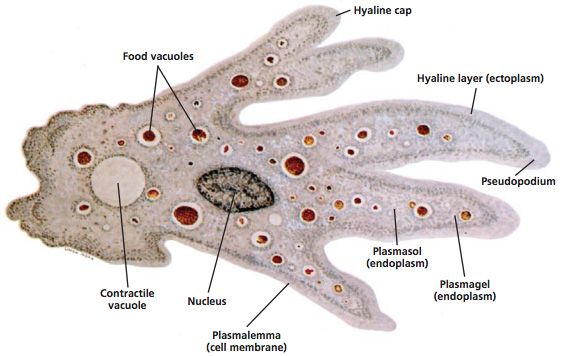

Description (Exam points):
🔸 Giardia

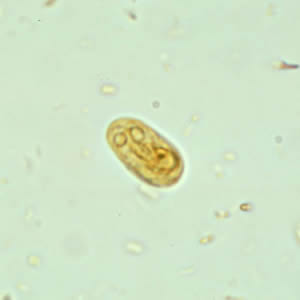

Description (Exam points):
🔸 Plasmodium Forms
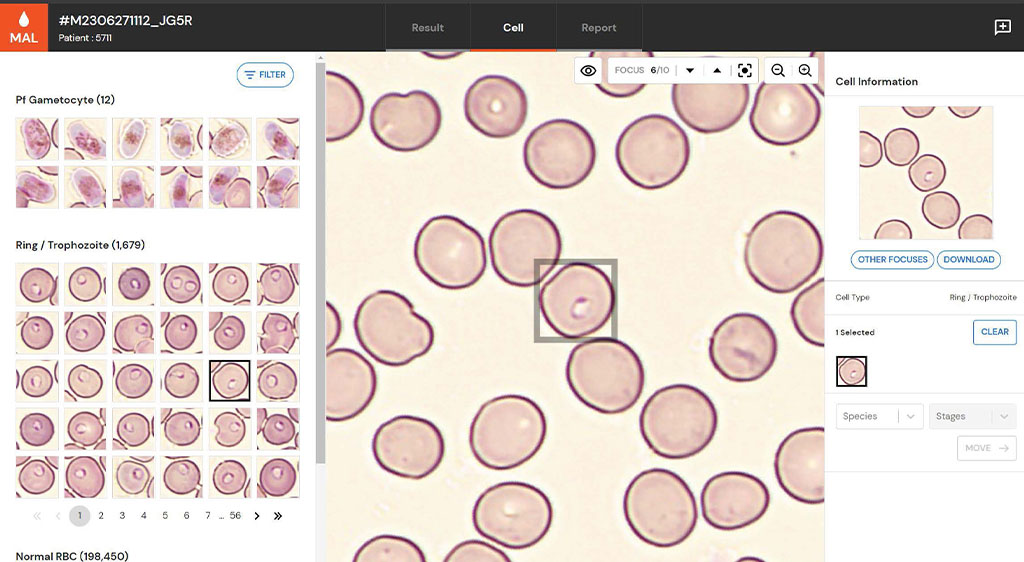


Description (Exam points):
🧠 FIGURES / DIAGRAMS
🔸 Protozoan Life Cycle
Cyst (infective stage)
↓
Ingestion
↓
Trophozoite (active stage)
↓
Multiplication
↓
Encystation
↓
Excretion of cyst
🔸 Amoeba Life Cycle (Detailed)
Ingestion of cyst
↓
Excystation in intestine
↓
Trophozoite formation
↓
Multiplication
↓
Encystation
↓
Cyst passed in stool
🔸 Types of Protozoa
Amoebae → Pseudopodia
Flagellates → Flagella
Ciliates → Cilia
Sporozoa → Non-motile
 Continue with Google